
Kitchen Lighting Guide: Brightness, Placement & Colour Temperature Explained


Lighting is one of the most consequential decisions in a kitchen design, and one of the most frequently underestimated. Unlike most elements of a kitchen, it cannot be revisited easily once the ceiling is plastered and the cabinets are in. It determines how the worktop performs, how safe the cooking zone is, and how the space reads from morning through to evening.
This guide covers what every client commissioning a kitchen should understand: how much light different spaces need, where it belongs, how to think about colour temperature, and how the layers of a considered lighting scheme work together.
Why Lighting Is a Design Decision, Not a Finishing Detail
A kitchen asks more of its lighting than almost any other room. The same space needs to support precise food preparation, social ease, and the kind of quiet morning calm that makes the day start well. A single overhead source cannot do all of this. What it requires is a layered approach, ambient, task, accent, and decorative, where each circuit serves a distinct purpose and can be adjusted independently.
This layering is most effectively resolved during the design phase, when lighting positions can be planned in relation to cabinet layout, worktop zones and ceiling height. Retrofitting a considered scheme after the fact is rarely as clean. The conversations worth having early are about where the light falls, what colour temperature suits the space, and how the scheme shifts from day to evening use.
How Many Lumens for Kitchen Lighting?
Lumens measure the total output of visible light from a fitting. Watts measure energy consumption. When evaluating a kitchen lighting scheme, lumens are the unit that matters.
General Kitchen Brightness Guidelines
Kitchens generally require 300–500 lux of illuminance at worktop level for comfortable, safe food preparation. Lux measures lumens per square metre, so the total output needed scales with room size. As a general reference:
- Small kitchen (under 10m²): 3,000–5,000 total lumens across all sources
- Medium kitchen (10–15m²): 5,000–8,000 total lumens across all sources
- Large open-plan kitchen (15m²+): 8,000–12,000+ total lumens across all sources
These figures account for the full lighting scheme: ceiling fittings, under-cabinet lighting, island pendants and any accent sources. The overhead circuit alone will not reach these levels and should not be expected to.
Task Zones Need Their Own Dedicated Light
Worktops, the hob and the sink each benefit from lighting that is independent of the general ambient circuit. Under-cabinet LED strips or downlights positioned directly above these zones are specified to deliver focused, shadow-free light where food is being prepared.
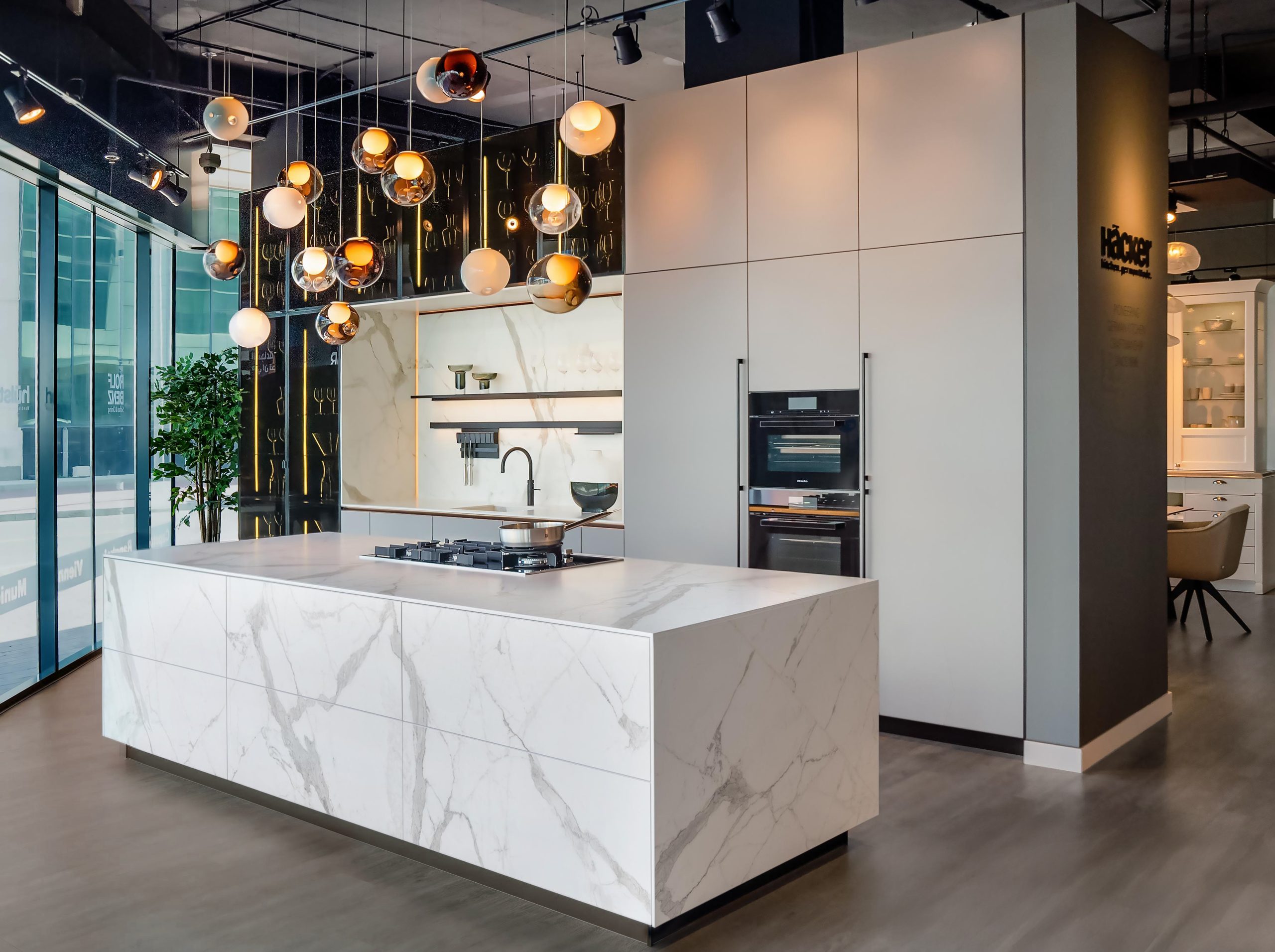
A designer planning a Häcker kitchen will locate these positions precisely in relation to cabinet overhangs and worktop layout, so the light lands where it is needed rather than where the ceiling grid happens to fall.
Can Lights in the Kitchen: How Many Pot Lights Do You Need?
Recessed downlights, often called pot lights or can lights, are a considered and unobtrusive choice for kitchen ceiling lighting. Their value lies in precision: positioned well, they address specific zones without over-illuminating the whole space. Positioned poorly, they create a grid of light that serves no zone particularly well.
How to Calculate How Many Pot Lights in a Kitchen
A practical rule of thumb: divide the ceiling height in feet by two to get the appropriate spacing between each downlight. In a kitchen with a standard 2.4m (approximately 8ft) ceiling, downlights should be spaced roughly 1.2m (4ft) apart. As a general guide:
- Small galley kitchen: 4–6 downlights
- Medium L-shaped kitchen: 6–9 downlights
- Large open-plan kitchen: 9–15+ downlights, depending on layout
Positioning them at least 60cm from walls and cabinetry manages glare. Specifying a dimmable driver for each circuit gives the flexibility to shift the kitchen from working light to ambient light without changing a fitting.
Positioning Downlights Over Key Zones
Considered kitchen lighting schemes are designed around the kitchen’s functional zones rather than a uniform ceiling grid. A downlight directly above the hob, one over the sink, and island downlights centred over the worktop edge, not the middle of the island, all reduce the shadow that falls towards a person as they work.
This is one of the reasons lighting positions are resolved alongside the cabinet and appliance layout, not independently of it.
Under-Cabinet Lighting: What to Specify and Why
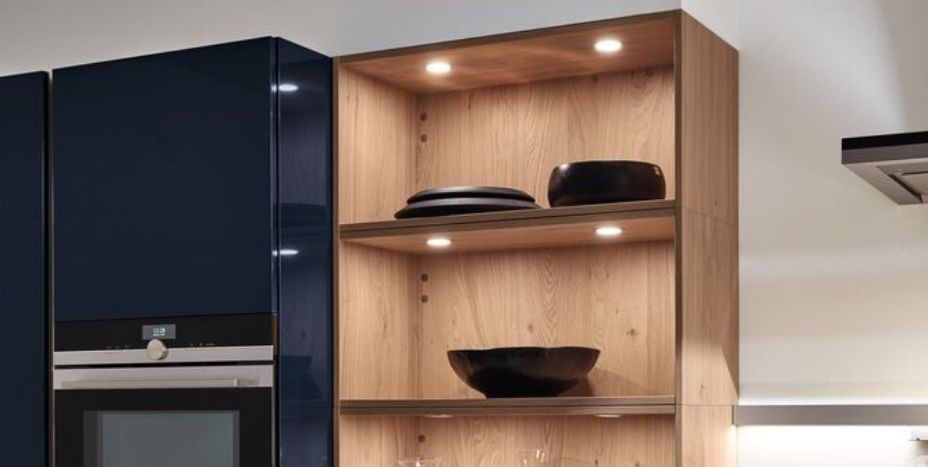
Under-cabinet lighting is among the most functional elements of a well-planned kitchen. It directs light directly onto the worktop, eliminates the shadow created by overhead light being blocked by the body as someone works, and adds a warm, settled quality to the kitchen that no ceiling fitting alone can provide.
In a Häcker kitchen, under-cabinet LED strips are integrated during manufacture, positioned toward the front edge of the cabinet base to maximise coverage across the worktop surface. This is distinct from lighting retrofitted after installation: the result is cleaner, the cable routing is concealed within the cabinet carcass, and the light position is calibrated to the worktop depth. Nothing is left exposed, and nothing is worked around after the fact.
For zones near the sink or hob, fittings are specified with an appropriate moisture rating. For the rest of the kitchen, a low-profile LED strip running the full length of each cabinet run produces consistent, shadow-free illumination rather than the pools of light created by individual puck fittings.
Plinth Lighting: A Detail Worth Including
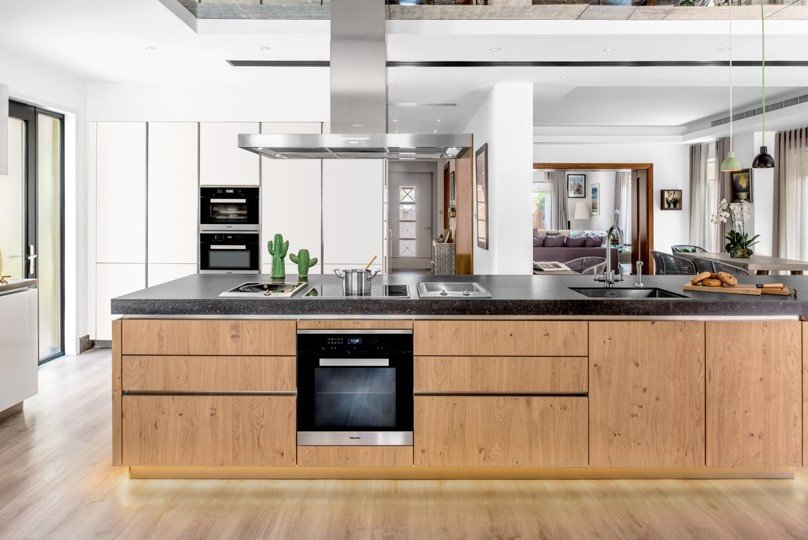
Plinth lights are small LED fittings set into the kickboard at the base of kitchen units, just above floor level. They are not a primary light source — they are a layer. Done well, they create the impression of the kitchen sitting lightly above the floor, provide a soft navigational glow after dark, and add a dimension of depth that overhead lighting cannot achieve.
The decision to include plinth lighting is most straightforwardly made at the design stage, when the kickboard depth and cable routing can be accommodated in the specification.
The colour temperature chosen for plinth lights, typically warm white at 2700K–3000K, is usually softer than the task or ambient circuits, reinforcing the distinction between functional light and atmospheric light.
What Is the Best Colour Temperature for Kitchen Lighting?
Colour temperature, measured in Kelvin (K), describes how warm or cool a light source appears. It is one of the decisions that most affect how a kitchen feels to be in, and one that is sometimes left too late in the process.
The Colour Temperature Scale Explained
- 2700K – Warm white: soft, amber-tinged light — warm and settled, well suited to open-plan kitchen-dining spaces and accent or plinth circuits
- 3000K – Soft white: a slightly cooler warm white, clean without being clinical — the versatile choice for general kitchen ambient lighting
- 4000K – Cool white / neutral white: crisp and bright, with no yellow cast — the right specification for task lighting above worktops where colour accuracy in food preparation matters
- 5000K–6500K – Daylight: very cool, blue-white — rarely appropriate for a residential kitchen; the quality of light is better suited to commercial environments
What Is the Best Colour Temperature for a Kitchen?
A considered approach is to layer two temperatures: 3000K for the ambient overhead circuit and 4000K for the under-cabinet task lighting. This creates a kitchen that feels warm and welcoming in its general atmosphere, with precise, clear light at the worktop when it is needed.
For those who prefer a consistent temperature throughout, 3000K is a reliable single choice. It works across kitchen styles from contemporary to classic, flatters food and materials well, and remains comfortable over long periods. The choice of colour temperature is also worth considering in relation to the finish palette — warm whites read differently against painted timber than they do against pale stone or matt lacquer.
What Colour LED Light Works Best by Kitchen Style?
- Modern handleless kitchens: 4000K for a sharp, architectural quality consistent with handleless design
- Shaker and in-frame kitchens: 3000K for warmth that complements painted finishes and frame detailing
- Open-plan kitchen-diners: 2700K–3000K to carry warmth across both the kitchen and dining areas
- Utility and prep kitchens: 4000K for clarity and functionality where the emphasis is on performance
Building a Layered Kitchen Lighting Scheme
A complete kitchen lighting scheme is built from four distinct layers, each with a different role:
- Ambient lighting: the general illumination of the space — typically recessed downlights or a central ceiling fitting on a dimmable circuit
- Task lighting: focused light directed at worktops, the hob and the sink — under-cabinet LEDs and zone-positioned downlights positioned in relation to where the work happens
- Accent lighting: plinth lights, LED strips within glass-fronted cabinets, and pendant lighting over an island — details that add depth and shift the character of the space in the evening
- Decorative lighting: pendants or statement ceiling fittings that function as focal points and reinforce the design of the kitchen
Running each layer on an independent dimmable circuit — or specifying a smart lighting system — gives full control over the character of the kitchen at any time of day. It is a level of considered detail that is most cleanly resolved during the design process rather than added to it.
Frequently Asked Questions
How many lumens do I need for kitchen lighting?
Most kitchens require 300–500 lux at worktop level. To arrive at a total lumen figure, multiply your kitchen’s floor area in square metres by this range. A medium kitchen of around 12m² typically needs 5,000–7,000 total lumens distributed across all sources. Task lighting above worktops should always be considered as a separate circuit from the ambient overhead level.
How many pot lights should I have in my kitchen?
As a starting point, halve the ceiling height in feet to get the ideal spacing between recessed downlights. In a standard 2.4m (8ft) kitchen, aim for downlights roughly every 1.2m (4ft). For most kitchens, 6–9 recessed downlights provide even coverage, though zone positioning matters as much as quantity.
What colour LED light is best for a kitchen?
Warm white (2700K–3000K) and cool white (3000K–4000K) are the appropriate ranges. For a kitchen that works at both a functional and atmospheric level, specifying warm white for ambient circuits and cool white for task lighting gives a considered result. Blue-toned daylight bulbs (5000K and above) are rarely suitable for a residential kitchen.
Is under-cabinet lighting worth including in a kitchen?
Yes — and it is worth specifying during the kitchen design rather than retrofitting. Integrated under-cabinet lighting provides focused worktop illumination that overhead light cannot match, eliminates working in your own shadow, and contributes significantly to the quality of the kitchen in the evening. In a Häcker kitchen, it is built into the specification from the outset.
What is the best colour temperature for kitchen lighting?
For most kitchens, 3000K for ambient lighting and 4000K for task lighting is a practical combination. If a single temperature is preferred throughout, 3000K is a reliable choice. It suits a wide range of kitchen styles, flatters both food and materials, and feels comfortable for extended daily use.
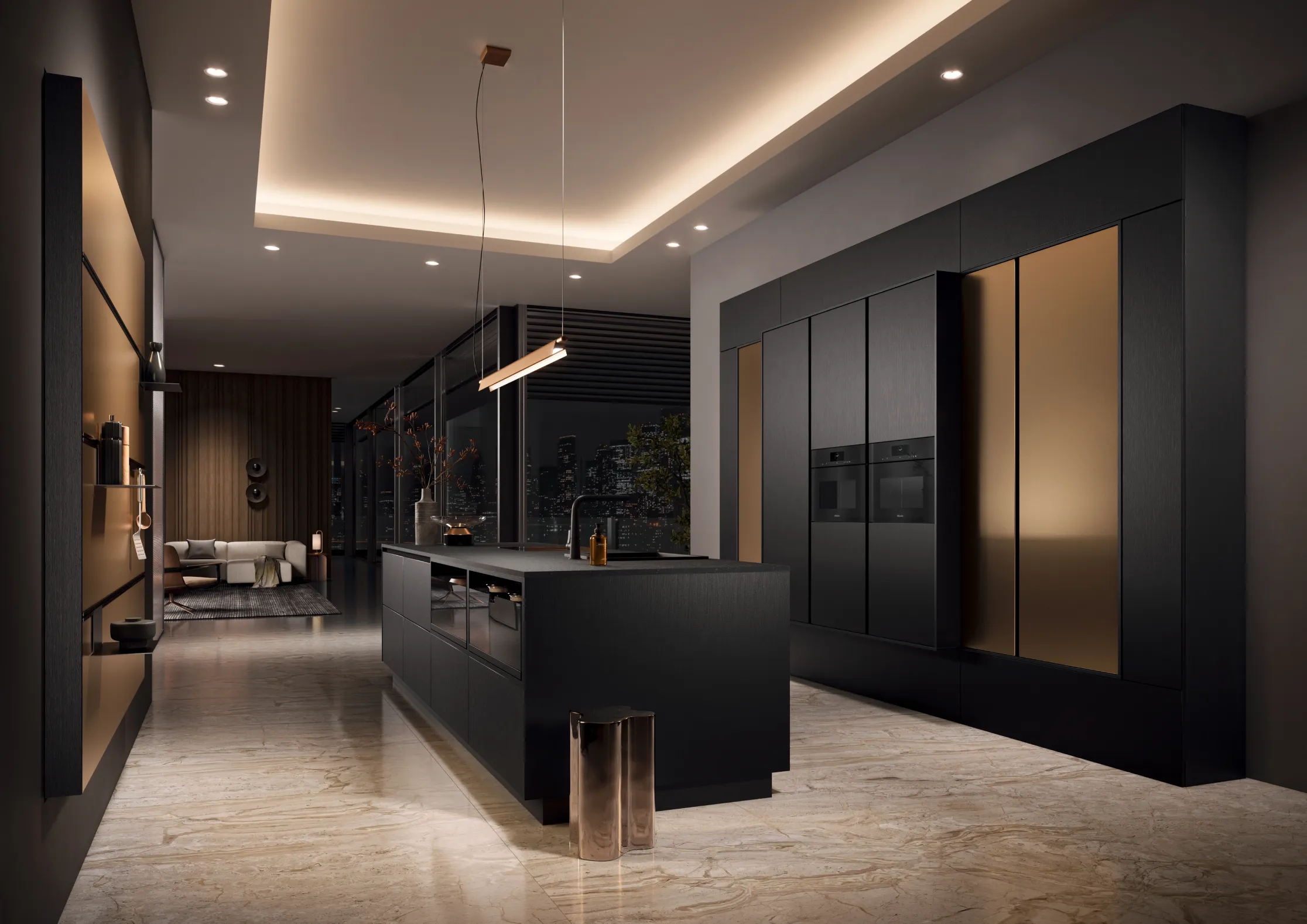
Lighting Worth Deciding Early
A kitchen lighting scheme cannot be fully resolved in isolation from the kitchen itself. The position of a downlight only makes sense in relation to the cabinet it sits above. The value of under-cabinet lighting depends on where the worktop ends and the upstand begins. The right colour temperature is informed by the finish palette, the ceiling height, and how the space connects to the rest of the home.
These are decisions our design team works through as part of the kitchen specification, not as an add-on, but as a considered element of the brief. If you are in the early stages of planning a kitchen or want to understand what a well-specified lighting scheme would look like for your space, our team is available to discuss it in the studio or by appointment.
Read More
![JBR Kitchen- Sepide Uhlmann]()
Kitchen Worktops & Backsplashes: Materials, Performance & Style
Learn MoreWorktops and backsplashes sit at the point where appearance and performance meet. They ...
![]()
Choosing Kitchen Colours: Timeless Palettes for Luxury Homes
Learn MoreColour is one of the first things people respond to in a kitchen. Before you notice sto...


Create a kitchen that is as individual as you.
German crafted, Exquisite Häcker Kitchen is waiting just for you.
Speak to Our Designers Now!